
Juggling wisdom and knowledge we make our way through a dark world, hoping for a light at the end of the journey. Source
Path in the Shadows
Juggling wisdom and knowledge we make our way through a dark world, hoping for a light at the end of the journey. Source
Path in the Shadows
– Aishwary Mishra
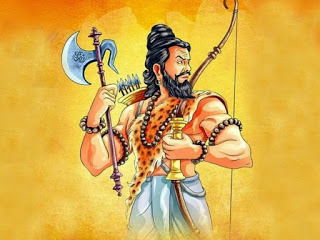
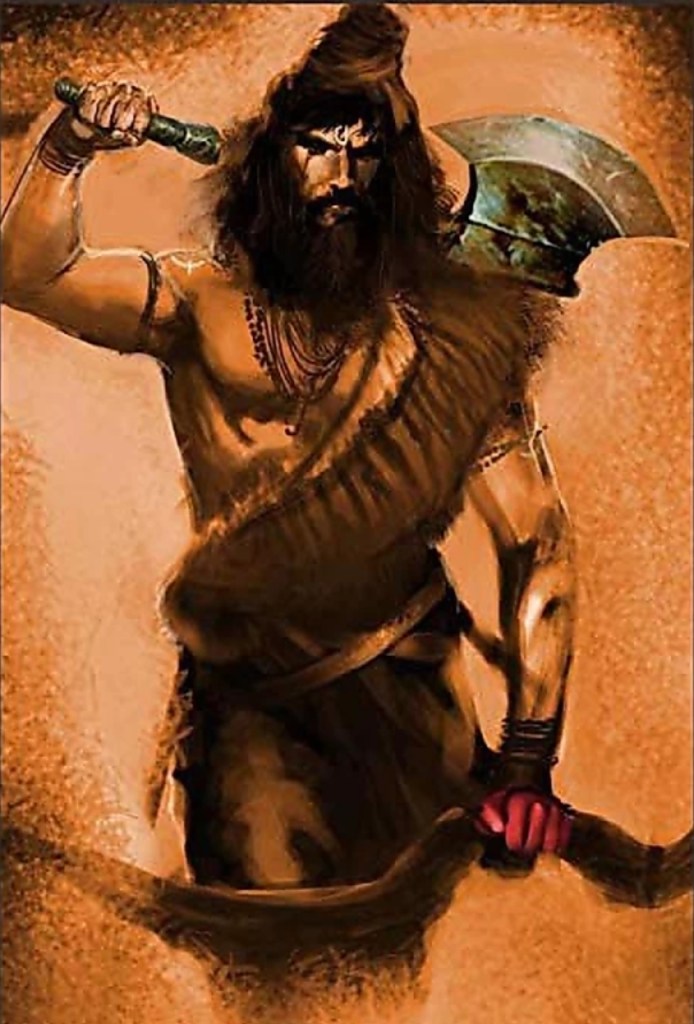
Lord Parshuram’s Parshu
The most famous and one of the most powerful weapon of Lord Parshuram is the Parshu (Halberd). This furious weapon was given by Lord Shiva to the 6th incarnation of Lord Vishnu popularly know as Parshuram.
Vijay Dhanush (Bow)
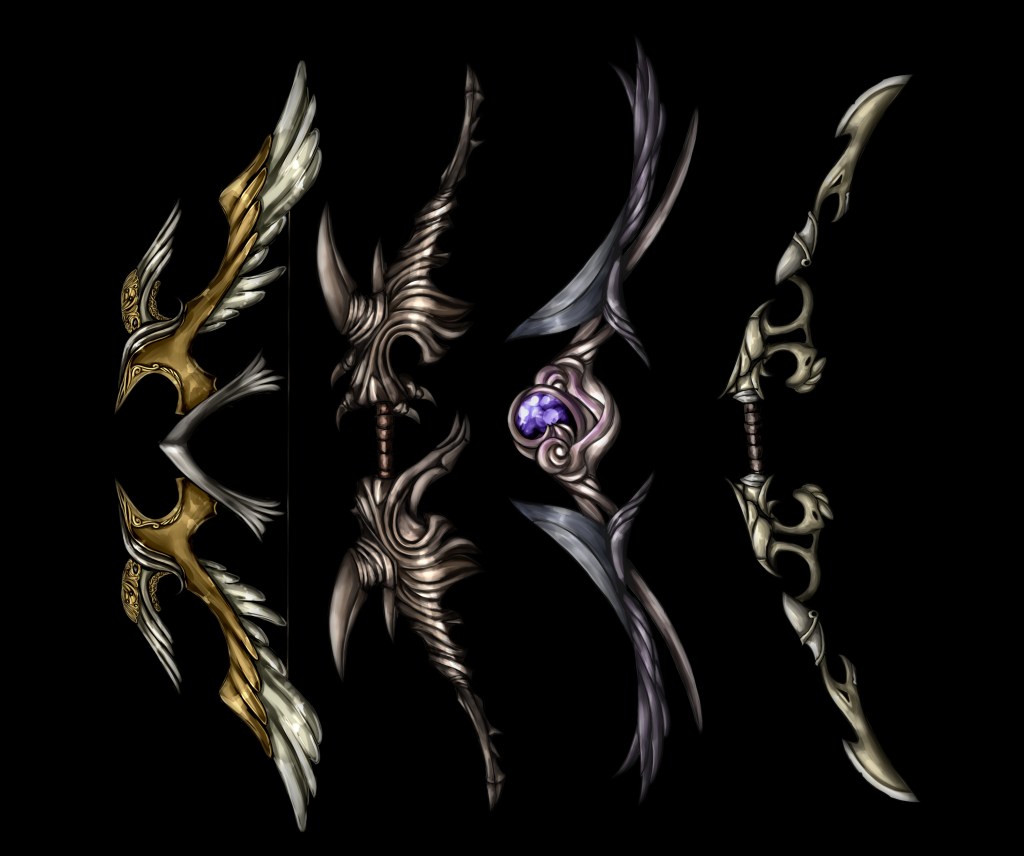
One of the most powerful bow of all time the Vijya bow. This is the bow of Lord Parshuram which was later given to Karna by Lord Parshuram. With this bow any warrior can use Divine Weapons (Astra) against his/her enemy or apponent.
Lord shiva’s bow Pinak
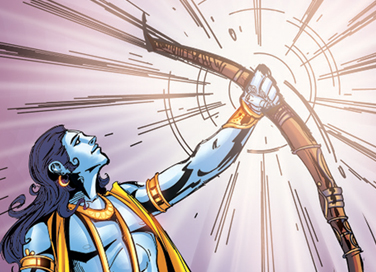
One of the deadliest weapon of Lord Shiva the Pinak dhanush ( bow ) was given to Lord Parshuram. This bow is considered as the most powerful bow among all the bows. This bow was given to King Janak ( Father of Goddess Sita ) which was later broke by Lord Ram.
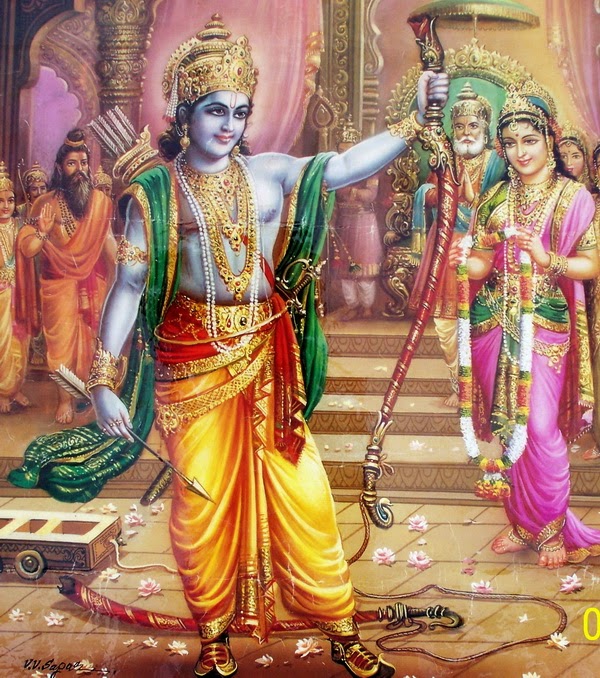
This is the bow of Lord Vishnu which was given to Sage Richika which later given to Sage Jamadagni ( Father of Lord Parshuram ) and then to Lord Parshuram. This bow is one of the main weapons of Lord Vishnu. In south India this weapons is also known as Kodanda.
– Aishwary Mishra
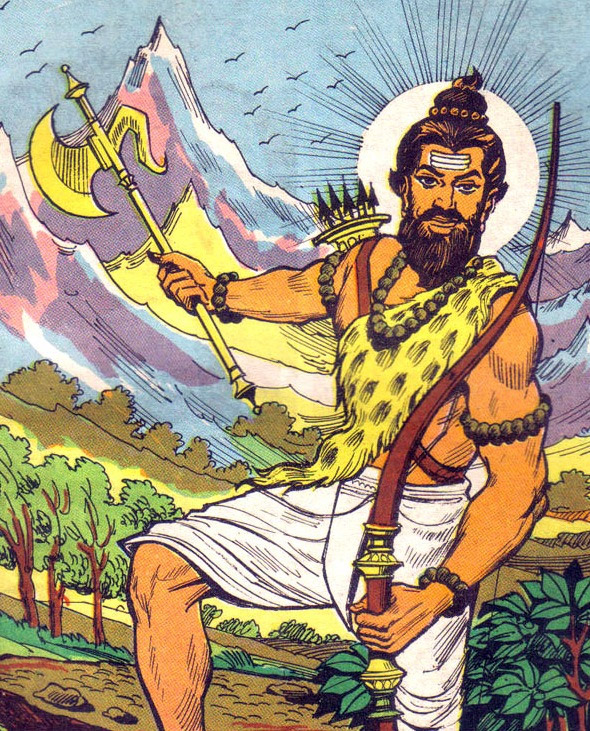
Parshuram, his father (the sage Jamadagni), his mother, and his brothers all lived in a small hut on the outskirts of a kingdom. They were Brahmins and for the most part, they stayed out of the affairs of the kingdom. One day, they were gifted a beautiful cow named Kamadenu. Kamadenu provided their family with anything they could ever need.
Meanwhile, the Kshatriyas running the kingdom were getting increasingly authoritarian and cruel. A small band of soldiers came to the hut and asked for tax. Jamadagni provided the soldiers with gifts from Kamadenu, and the soldiers left. This cycle repeated for a while, but more and more soldiers came each time to see Kamadenu.
One evening, while Parshuram was out in the forest, the soldiers came and killed Kamadenu, thinking there would be something even greater inside. There was not. When Parshuram got back to the hut, he saw what had happened and flew into a range.
Because his family lived in the forest, Parshuram was RIPPED from doing manual labor work. He had an axe that he used to fall trees, and with that, he charged towards the kingdom. He cleansed the kingdom of Kshatriyas, killing every one in his path, because all of them were behaving against their dharma. He killed thousands.
Eventually, his rage subsided and he saw what he had done. By killing thousands of Kshatriyas as a Brahmin, he too had gone against his dharma. He exiled himself to the Himalayas to do penance, and repent. He is still there, meditating on Mount Kailash.

I have a half-Indian, half-Scottish character named Niraj Ajit Sonar (Ajit being his father’s name) born in Scotland. His father is Marathi and immigrated to Scotland, while his mother is white. I’m mostly confident this name makes sense, but thought I should check anyway. My primary concern with this character is showing that he is a practicing Hindu when the story takes place in a boarding school. Beyond him going home for certain important holidays, how might he practice on a daily basis?
I think the best way to code his Hinduism is frankly to explore the tensions that the climate of traditional Briish boarding schools/ Oxford/ Cambridge type can provoke for people from former colonies. This struggle strikes me as largely consistent with his Scottish/ Gaelic roots, particularly if he grew up speaking any form of Scots. For all the social mobility opportunities they offer, British boarding schools present real challenges to a person engaged with their non-British heritage. He’ll hear a lot of views on colonialism and his father’s culture (arranged marriages, dietary restrictions, stereotypes, pro-British sentiment, etc.) that directly conflict with his parents’ relatives’ stances in borderline offensive ways (Particularly for the Indian side). Even geography lessons could be a potential trigger. Starting from when I was a kid, states like Maharashtra started replacing the British names for regions and cities with their pre-British names (Did anyone wonder why Bombay, Madras and Calcutta became Mumbai, Chennai and Kolkata overnight?).
I recommend talking to people of mixed desi heritage living in the UK about their experiences with British racism and xenophobia. Tiktok has a lot of great “POC at Hogwarts” clips that skewer British parochialism with great flair.
He might practice by praying to an idol he brought with him, or wear an elephant necklace. It doesn’t have to be an expensive metal, for the reasons that Marika mentioned. That’s what my dad would do. Mom says he would get up at five AM every day and pray while working as an oncologist.
THE OWL CITY TIMES

This is regarding your recent answer where you stated that Brahmin Hindus are overused in Western Fiction. I am currently writing one such character. How do I make sure that my character is mindful and respectful of other castes and religions, especially when she has been raised to believe otherwise? How should I portray her opinions regarding things like the reservation policy which she complains about due to her upbringing/in her ignorance? If I were to change her community and start researching to make her represent other castes/religions, would that be disrespectful/tokenism?
One could convincingly argue caste politics and the reservation system are intra-community issues, so writing a story that doesn’t lean heavily into either may simply be the best option. I ask our desi followers to contribute on whether they think this is a good topic for a non-desi to explore.
*A note to our desi followers, please keep your comments civil and productive. We request that non-desis do not comment.
Should you decide to explore the issue, I offer myself as a case study. I complain about the reservation system all the time, just like I would complain about affirmative action in the US. However, I also complain about the fact that neither school funding nor resource distribution is equitable in the US nor in India. I don’t see a contradiction between the two ideas. What really frustrates me is when people who oppose affirmative action and the reservation system also oppose policies promoting equity and meritocracy, because that tells me a lot about that person’s true priorities. Ultimately, my stance on these issues is flexible and changes depending on the success of policy and the severity of inequality/ inequity.
I think you can have your Brahmin character start from one position, and, through her own experiences and observations, end up with a completely different perspective. I know people who had no issue with the reservation system growing up, but later viewed it more as a tool for politicians to artificially pit different caste groups against each other while the politicians stayed in power. I’ve heard stories of people suffering because of the artificial scarcity introduced by the reservation quotas (Particularly during India’s socialist phase), while others suffered because their legitimacy and skill levels were always called into question.
I can similarly imagine a Brahmin starting from the opposite viewpoint (Blaming the reservation system and other castes), only to interact with people from other castes to realize that the reservation system is a flawed policy that nevertheless seeks to address the accumulated frustration of years of inequality and oppression. Either way, I particularly recommend showing the consequences of her changing opinions through her interactions with family and friends if her ideas change over time. Thinking for oneself and questioning community norms always invites a lot of solitude and introspection. Does she feel loneliness? Independence? Frustration? Shame?
Either way, please consider consulting a sensitivity reader. There is nothing wrong with showing that your character has flaws and intrinsic biases with respect to casteism and Hindu nationalism (Should you care to go that route). Many Brahmins have such biases, but you want to fall short of demonizing Brahmins, Hindus and South Asians as a whole (I notice many white people find it difficult to appreciate the differences between desis, regardless of religion, ethnicity and caste). Remember, outside of India, Brahmins, like all Hindus, are usually in the minority, and, if you are white, your commentary on our views will have greater weight with other white people than anything we have to say about ourselves.
Article By – Marika Sharma
REPORT. Abhay Mishra
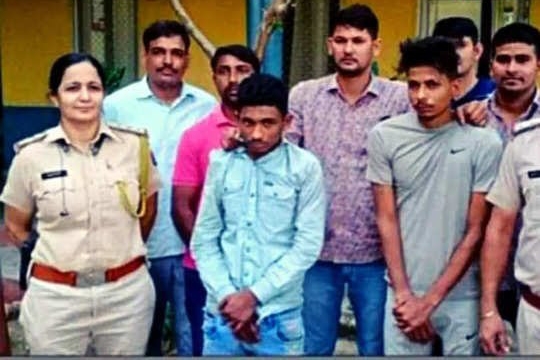
Rajasthan’s Kota Police on Thursday exposed the murder of a 17-year-old teenager. Four days ago, two miscreants who brutally killed Kishore Rajkumar Sharma were arrested by the police from the border of Madhya Pradesh. Who has already committed many crimes. On 7 November, Rahul alias Aau and Sonu Meena together killed the prince by taking him to Bandha-Dharmapura in Kota city. The prince was murdered for not giving a loan of only one thousand rupees. These people also demanded money from the deceased for the recharge done by the sister of the killer Rahul.
The deceased Rajkumar used to get the mobile recharge done by Rahul’s sister. Was acquainted with the killers Sonu Meena and Rahul alias Aau. There was a rift between the deceased with Sonu Meena. The killers have given the reasons for the murder to the police.
It is worth mentioning that Sonu Meena is the miscreant who had waved a knife in Swami Vivekananda Nagar exactly a year ago. Meena was lying behind some youths with a knife. There are 9-9 cases against the killers Rahul and Sonu Meena under serious sections. Both the miscreants are residents of Kota.
The miscreants Rahul and Sonu made a video of Rajkumar stabbing him to death. Which itself went viral on social media, so that there is a sensation among the people. People were afraid of miscreants. After committing the murder, both the miscreants went home. On November 9, as soon as the body of Rajkumar, who was missing from the house, was found by the police, the miscreants, hiding their blood-stained hands, hiding their injuries, rushed to the steps of Jhalawar to flee to Madhya Pradesh.
Where Kota police caught them. During the incident, the deceased had fought a lot with the miscreants. During this the killers were also injured.
The deceased Rajkumar Sharma was the only son of Kota Municipal Corporation employee Omprakash. The family is in shock of losing the prince.

 The Owl City Times